Moss & Algae on Your Patio? Here's Why That's a Bigger Problem Than You Think
Ryan McGowan • January 10, 2025
- Owner-Operator of Simple Clean LLC Power Washing Services
- Power Washers of North America Board of Directors
- PWNA-Certified House Wash Specialist
Google 5.0
★★★★★
235+ Reviews
Patios and Walkway Pressure Washing Prevents Hazards
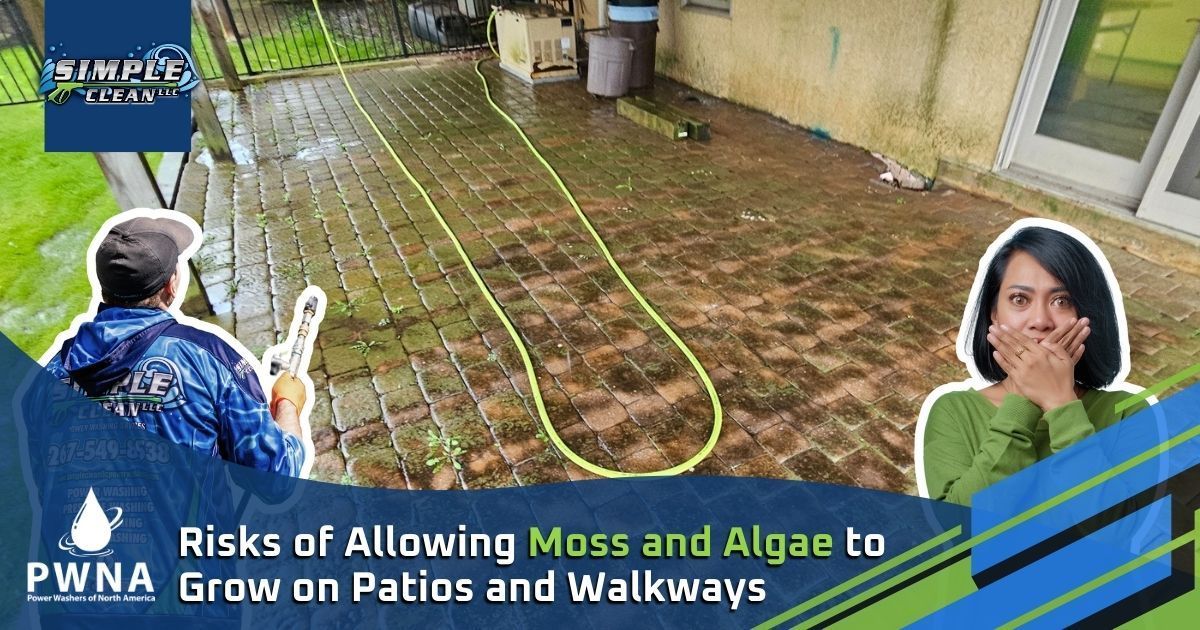
Moss and algae might seem harmless, but if left unchecked, these pesky plants can cause a host of problems for your home’s walkways. From being unsightly to posing a safety hazard, it’s important to keep your concrete, brick, and paver walkways free of these unwanted guests. One of the most obvious dangers of allowing moss and algae to grow on your walkways is the impact it can have on your home’s curb appeal. Whether you’re trying to sell your home or simply want to maintain its value, an overgrowth of moss and algae can quickly turn potential buyers away.
Moss and algae are both plant-like organisms that have simple root systems. They reproduce by releasing spores into the air, which eventually land and start new growth. Moss prefers shady, moist areas with compacted soil – like the shady side of your house or under trees. Algae, on the other hand, can grow in sun or shade and prefers bare, sunny spots.
Another danger of allowing moss and algae to grow on your walkways is the safety hazard it poses. When walkways are slippery, it increases the risk of falls and injuries. This is especially true for elderly loved ones or small children who might be playing in the yard. In some cases, the slip and fall might even result in a trip to the hospital.
Moss and Algae: The Silent Slipperiness Causing Your Walkway to be Dangerous
Moss and algae can make walkways slippery in a few different ways. First, when moss and algae grow on a surface, they retain moisture. This means that even if it hasn’t rained in a while, the surface will still be damp and slippery. Second, moss and algae can also make surfaces slick by growing in between the cracks and creating an uneven surface. This can make it harder to grip the ground, and if you’re not careful, you can easily slip and fall.
So what can you do to prevent moss and algae from making your walkways slippery? First, you can try to remove the growth. This can be done with a power washer or by manually scrubbing the surface. However, it’s important to be careful when using a power washer, as you don’t want to damage the surface underneath. If you decide to manually remove the growth, make sure you wear gloves and a mask to protect yourself from the spores.
Prevent Patio and Walkway Deterioration from Moss and Algae
A professional pressure washing company will have the tools and expertise to clean your concrete without damaging it. This will not only improve the appearance of your property, but it will also help to prevent permanent discoloration. If you are concerned about moss and algae growth on your concrete, don't wait to take action. Contact a professional pressure washing company today to get started.
Finally, if left untreated, moss and algae can damage your walkways. The roots of these plants can penetrate the surface of your walkway, leading to cracks and chips. Not only is this unsightly, but it can also lead to more serious problems down the road. You might not think that a little moss is a big deal, but it can actually cause serious damage to your home. The roots of the moss can work their way into cracks in cement and asphalt, causing them to widen and weaken. In extreme cases, this can lead to costly repairs.
Why Overgrowth of Moss and Algae on Patios and Walkways is Bad for Curb appeal
Leaving fungi overgrowth untreated simply looks like you don’t take care or pride in keeping your investment looking nice. The truth? Hiring a company like Simple Clean LLC Power Washing Services to routinely take care of the problem makes the exterior of your residence look a lot better. Moss and algae love wet, shady areas. If you have a lot of trees on your property, you’re more likely to see growth. The spores travel through the air and land on surfaces that are moist and lack direct sunlight. Once they take hold, they start to grow and multiply.
Let Simple Clean LLC Power Washing Services Help Control Algae Growth
There are a few ways to control moss and algae growth. For small patches, you can remove them by hand or with a power washer. For larger areas, you can apply a chemical treatment. But the best way to keep moss and algae from taking over your property is to routine power washing services. A power washer uses high-pressure water and proper cleaning solutions to remove moss, algae, dirt, and grime from surfaces. It’s a quick and effective way to keep your property looking its best.
Fill out our Contact Form Today to recieve a Free Estimate .

About the Author - Ryan McGowan
Ryan McGowan is the owner-operator of Simple Clean LLC Power Washing Services, based in Media, PA, and serving Delaware County, Chester County, and the surrounding Southeastern PA area since 2017. With 20+ years of hands-on experience in exterior cleaning, Ryan personally leads every job — no subcontractors, no rotating crews, just the same trained professional from the first estimate to the final rinse.
Ryan is a PWNA-Certified House Wash Specialist, holding credentials in House Washing, Roof Cleaning, and the Fundamentals of Power Washing through the Power Washers of North America. He also sits on the PWNA Board of Directors and contributes to its Marketing Committee, helping shape higher standards across the exterior cleaning industry — not just following best practices, but helping write them.
Beyond the certifications, Ryan's training includes OSHA 1910, DOT, EPA environmental compliance, GHS/HazCom, ladder safety, chemical safety, and first aid — the kind of behind-the-scenes preparation that homeowners rarely see but always benefit from. Simple Clean LLC is also AskTheSeal accredited, giving clients verified confidence in exactly who's showing up to their property.
When Ryan writes about power washing, soft washing, or house washing here on the blog, it comes from two decades of actually doing the work — not just marketing it.